Blood and bodily fluids may carry potentially infectious pathogens and can migrate through porous materials before becoming visible. Our team provides careful assessment and professional cleanup for San Francisco homes, apartments, rental units, and commercial spaces.
When blood is present on a surface, the visible stain often tells only part of the story. Blood and certain bodily fluids are considered potentially infectious material, and the contamination can extend well beyond what's immediately apparent. On a carpeted floor, blood may soak through the carpet fiber, saturate the padding, and seep into the subflooring beneath. Along baseboards, it can wick into wall materials or travel through flooring seams into adjacent rooms.
This migration pattern is especially relevant in San Francisco apartments and older residential properties. Many homes in Pacific Heights, Haight-Ashbury, or the Castro have original hardwood floors with gaps between boards, plaster walls with small cracks, or layered flooring installed over decades. These conditions can allow biological fluids to reach concealed areas that aren't visible during a casual inspection.
Ordinary household cleaning products are generally not designed for bloodborne-pathogen situations. Even if a visible stain is removed from the surface, contamination may remain in porous layers underneath. Professional blood cleanup involves assessment of both the visible area and potential migration paths, followed by appropriate removal, cleaning, and disinfection steps.
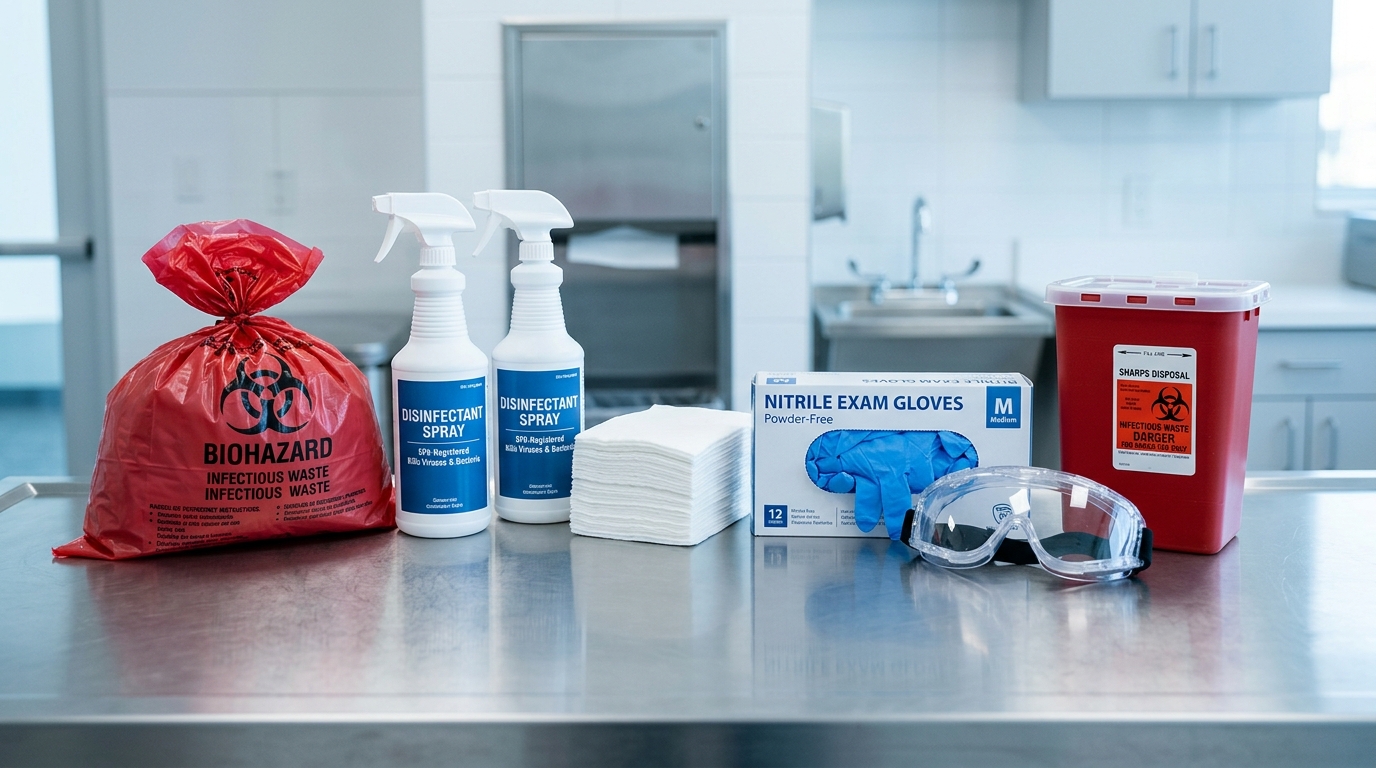
Personal protective equipment (PPE) is essential during blood cleanup work. Direct contact with blood or bodily fluids without proper protection creates an exposure risk. If you believe you may have been exposed, avoid further contact with the affected area and seek guidance from a medical professional.
After affected materials have been assessed, cleaning precedes disinfection. These are separate steps — cleaning removes visible contamination, while disinfection applies an appropriate product at the correct contact time to address pathogens on compatible surfaces. Label directions, product compatibility with the surface material, and adequate contact time all matter for effective disinfection.
Deeply affected porous materials — carpet, padding, certain upholstery, drywall, or insulation — may require removal when contamination has penetrated beyond the cleanable surface. This determination is made based on assessment findings, not assumed for every situation.
Evaluation of visible contamination and areas where blood may have migrated into concealed layers — beneath flooring, behind baseboards, or into furniture and structural materials.
The affected area is isolated using containment barriers to prevent cross-contamination. PPE and controlled access protect both cleanup professionals and building occupants.
Each affected material is evaluated for porosity, depth of contamination, and surface compatibility. Nonporous surfaces may be cleaned and disinfected; deeply saturated porous materials may require removal.
A work-area review after cleanup confirms the assessed scope has been addressed. Documentation is provided when requested, and restoration coordination is available separately.
San Francisco's dense neighborhoods create specific access and scheduling considerations for blood cleanup work. In multi-unit buildings along the Marina District or North Beach, discreet scheduling, service-elevator access, and coordination with building management help minimize disruption to neighbors and other tenants.
For commercial properties — offices in the Financial District, retail spaces in the Mission, or restaurants in Chinatown — we understand that minimizing business interruption matters. Cleanup can often be scheduled around business hours, with discreet access arrangements that protect your business's privacy and daily operations.
Rental property owners and property managers may need detailed documentation for insurance purposes or tenant communication. Written estimates, scope-of-work documentation, and records of completed cleanup can be provided when requested.
Blood and certain bodily fluids may carry potentially infectious pathogens including hepatitis B, hepatitis C, and HIV. Contamination often extends beneath visible surfaces into porous materials that cannot be effectively cleaned with household products. Professional assessment identifies the full scope and ensures appropriate cleaning, disinfection, and material handling.
It depends on the extent of penetration. If blood has soaked through carpet into the padding and subflooring, the porous layers typically need removal because cleaning and disinfection cannot reliably reach all affected material. Surface-level staining on compatible nonporous surfaces may sometimes be addressed through cleaning and disinfection.
Prompt attention helps limit further migration into porous materials. However, the appropriate timing depends on the circumstances. If the area is part of an active scene under investigation, cleanup must wait until official release. Otherwise, contacting a professional promptly allows for assessment and scope determination before contamination spreads further.
Some homeowners, renters, or commercial policies may provide coverage depending on the cause of the incident, policy terms, exclusions, deductible, and documentation. Contact your insurance provider to discuss your specific situation. Detailed estimates and cleanup documentation can be provided when requested.
