A sewage backup introduces potentially harmful biological contaminants into your property. Carpet, padding, wallboard, and other porous materials that contact sewage often cannot be safely cleaned and may require removal. Our team provides prompt assessment, water extraction, contaminated-material removal, and thorough disinfection for San Francisco homes and commercial spaces.
Sewage water — classified as Category 3 or "black water" in the restoration industry — can contain bacteria, viruses, parasites, chemical contaminants, and other potentially harmful organisms. Direct contact with sewage-contaminated materials poses health risks, and the contamination often spreads further than the visible waterline suggests.
San Francisco's older plumbing infrastructure means sewage backups can occur from aging sewer lines, tree-root intrusion, combined sewer overflows during heavy rain, or failures in building drain systems. Properties in lower-lying areas or neighborhoods with older infrastructure — parts of the Mission District, SoMa, or the Sunset — may face increased risk during wet-weather events when the city's combined sewer system is under heavy load.
Porous materials that have come into contact with sewage — carpet, carpet padding, wallboard below the contamination line, certain types of insulation, and upholstered furniture — typically require removal. These materials absorb contaminants that cannot be reliably removed through cleaning and disinfection alone.
Hard, nonporous surfaces like tile, concrete, and sealed flooring may be cleaned and disinfected effectively when the contamination has not penetrated the material or entered seams and joints. The assessment determines which materials can be salvaged and which need removal.
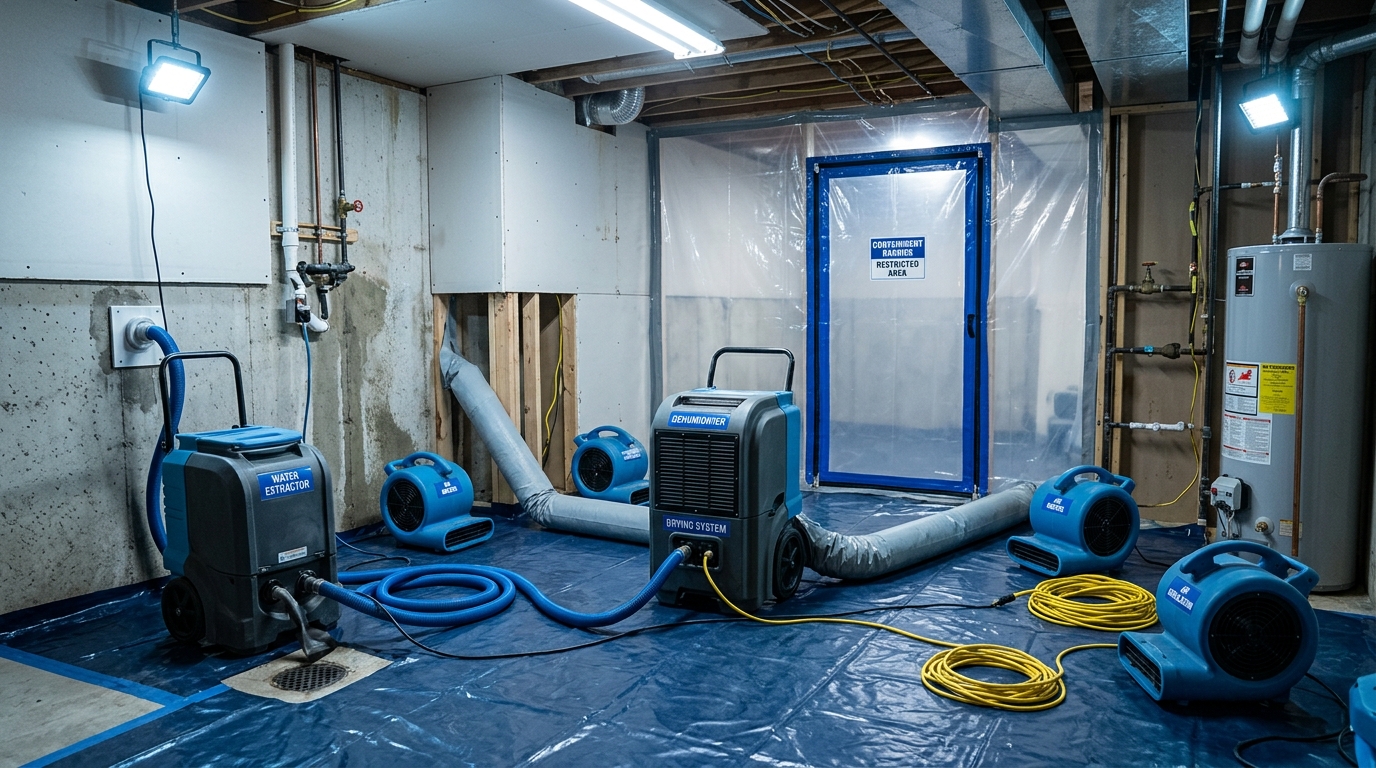
Beyond the biological contamination, standing moisture from a sewage backup creates conditions for microbial growth if not addressed promptly. Professional water extraction, structural drying with commercial air movers and dehumidifiers, and moisture monitoring help prevent secondary damage to the property. San Francisco's cool, humid climate — especially in fog-prone neighborhoods along the coast — can slow natural drying, making professional moisture management particularly important.
Evaluation of the backup source, affected area, water depth, contaminated materials, and structural conditions. The plumbing cause should be addressed separately by a qualified plumber before or during cleanup.
Standing sewage water is removed using commercial extraction equipment. Prompt extraction limits further absorption into porous materials and reduces secondary damage risk.
Affected porous materials — carpet, padding, lower sections of wallboard, damaged insulation — are removed and handled according to applicable waste requirements.
Remaining compatible surfaces are cleaned and treated with appropriate disinfectants. Commercial drying equipment is deployed to bring moisture levels back to acceptable ranges.
Odor sources are addressed directly — not masked with fragrance. A final review confirms the scope has been completed, and restoration coordination is available for repairs.
Yes. Sewage contains bacteria, viruses, parasites, and other potentially harmful microorganisms. Contact with sewage-contaminated materials poses health risks, and porous materials that absorb sewage typically require professional removal rather than cleaning alone.
Direct contact with sewage-contaminated materials carries exposure risks. Even a seemingly minor backup may have affected porous materials beneath the surface. Professional assessment helps determine the full scope of contamination. Avoid direct contact with affected areas and consult a qualified professional.
The timeline depends on the volume of water, the size of the affected area, the materials involved, and the drying time required. Structural drying with commercial equipment typically takes several days. A realistic timeline is provided after the on-site assessment.
Standard homeowners policies may not cover sewage backup unless you have a specific endorsement or rider. Coverage depends on your policy terms, the cause of the backup, applicable exclusions, and your insurer's decision. Contact your insurance provider to review your coverage.
