Persistent odors in a property almost always have a physical source — biological contamination, decomposition, sewage residue, or affected porous materials. Air fresheners, scented candles, and surface sprays only mask the symptom. Professional odor removal identifies and addresses the source directly.
A persistent odor in a San Francisco property is a signal that something physical is causing it — not simply stale air. Biological odors from blood, bodily fluids, decomposition, urine, feces, or sewage are generated by contaminated materials that continue releasing odor compounds until the source is identified and removed.
Fragrance masking — sprays, candles, plug-in deodorizers, or painting over affected surfaces — does not address the underlying contamination. The odor returns because the source material remains. Professional odor removal follows a different approach: identify the source, remove or treat the contaminated material, clean and disinfect compatible surfaces, and then apply targeted odor treatment where needed.
The assessment begins with understanding what type of odor is present, because different odor sources require different remediation approaches:
Carpet, padding, wallboard, insulation, and upholstery can absorb and retain odor-causing contamination at the material level. In older San Francisco properties — Victorians in Noe Valley, Edwardian flats in the Western Addition, or pre-war apartments in the Richmond District — layered flooring, plaster walls, and original woodwork may retain odors in ways that newer sealed surfaces do not. Assessment determines whether the porous material can be treated effectively or requires removal.
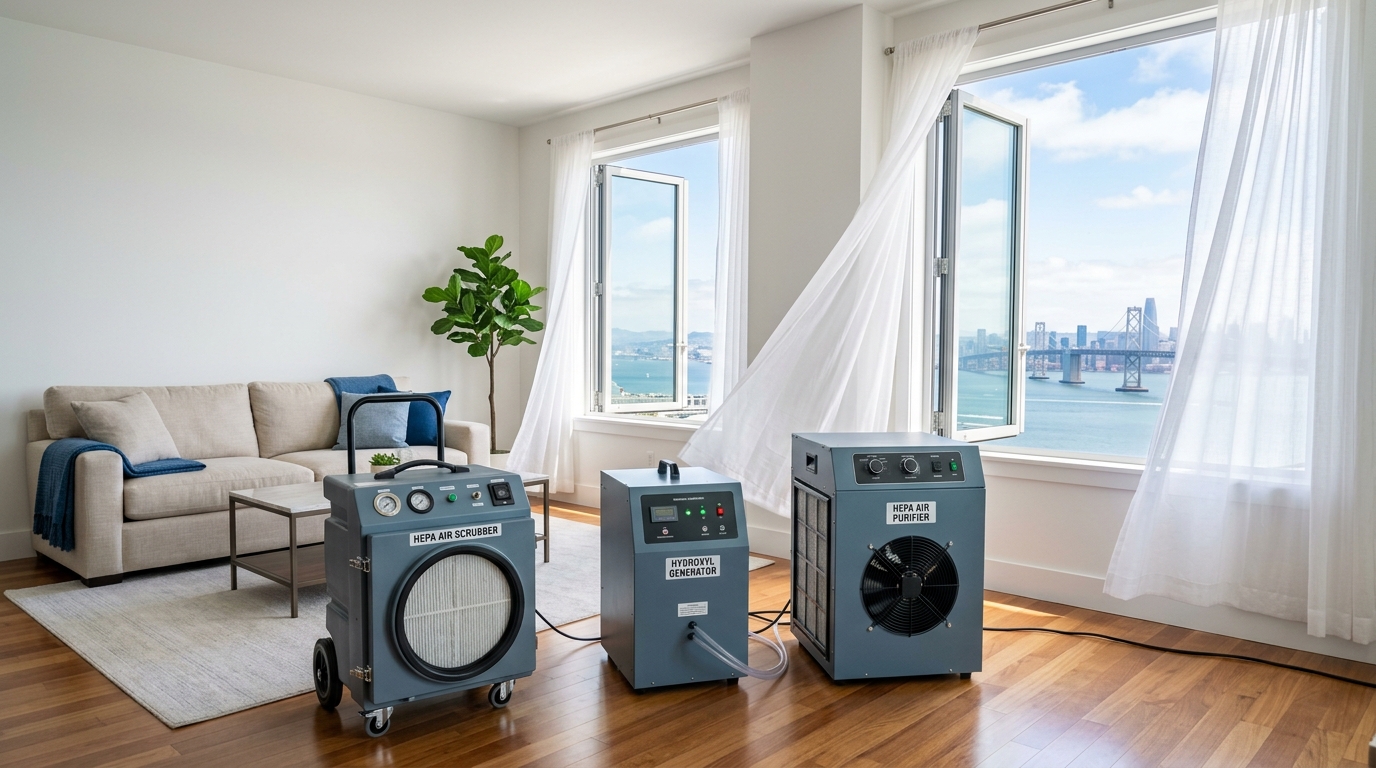
After source removal and surface treatment, air-quality treatment may be appropriate. Equipment such as HEPA air scrubbers, hydroxyl generators, or ozone generators may be used depending on the situation. Each has different applications, occupancy restrictions, and material-compatibility considerations. We discuss which methods are suitable during the assessment.
If the source material hasn't been identified and removed, the odor will return. Surface cleaning addresses what's visible, but biological contamination embedded in porous materials — padding, subflooring, wallboard — continues producing odor compounds until the affected material is removed or effectively treated.
Air treatment with ozone generators or hydroxyl generators can be helpful as a supplemental step after source removal. However, these treatments alone cannot resolve odors caused by contaminated materials that remain in place. Source removal comes first; air treatment follows when appropriate.
The timeline depends on the odor source, the extent of affected materials, whether material removal is required, and whether air treatment is part of the plan. Some situations can be addressed within a day; others involving extensive porous-material removal may take longer. A realistic timeline is provided after assessment.
We address the contamination source directly and apply appropriate treatment methods, but results depend on the type and extent of contamination, the materials involved, and property conditions. We discuss expected outcomes honestly during the assessment rather than making unconditional guarantees.
